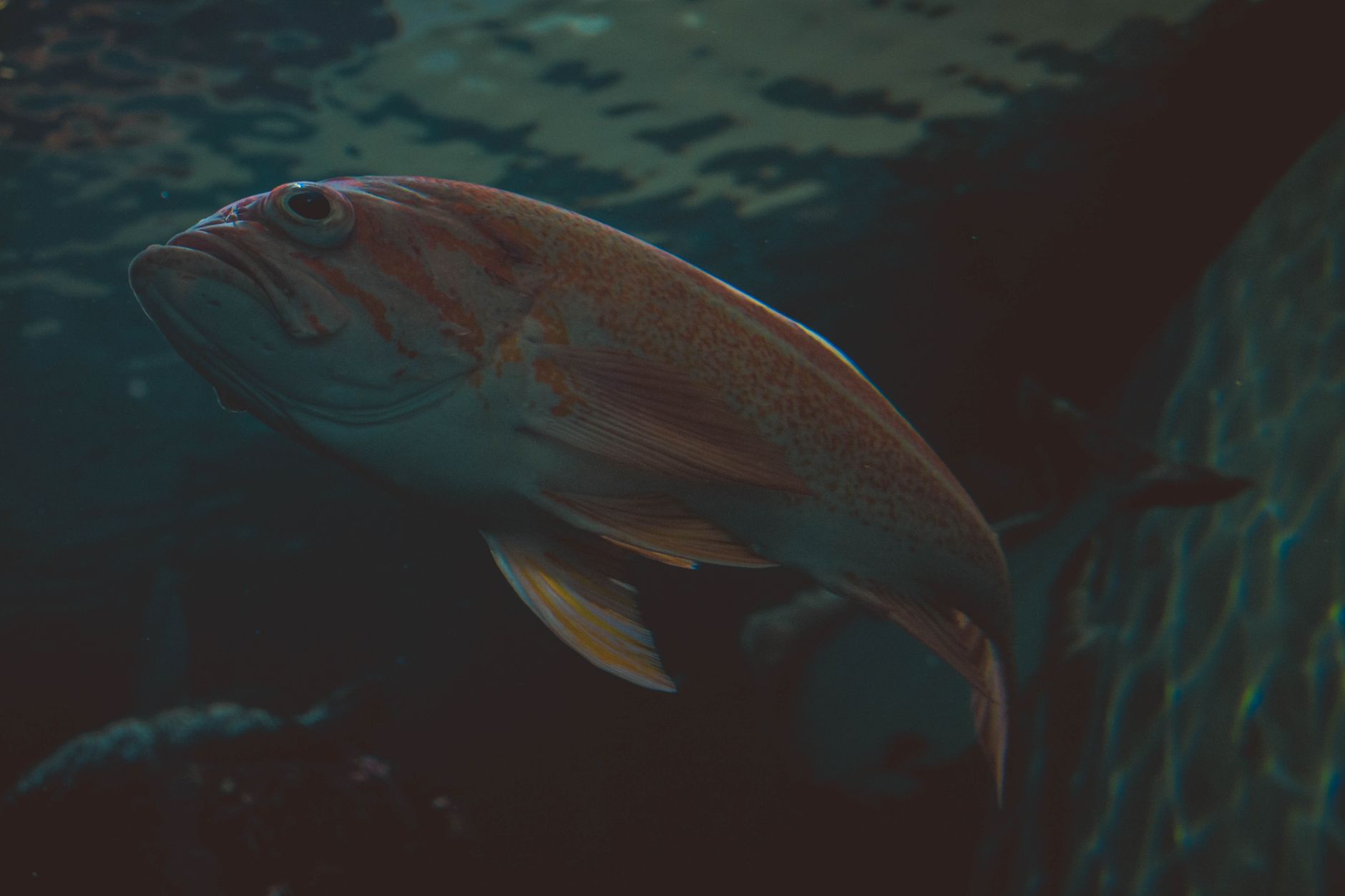
Deep-Sea Fish Adaptations: Test Your Knowledge
Published Jul 7, 2026 · Updated Jul 31, 2026 · Editorial Team
Challenge your understanding of the extraordinary physiological and behavioral adaptations that allow fish to survive in the extreme conditions of the deep ocean.
❓ 10 Questions
⏱️ 5 Minutes
Advertisement
Question 1 of 100 correct
⏱️ 05:00
QUESTION 1
Which biochemical adaptation do many deep-sea fish use to counteract the destabilizing effects of high hydrostatic pressure on protein structure?
All Questions in This Quiz
Here is every question waiting for you in this 10-question trivia quiz. Play it in the interactive player above to lock in your answers, see your score and read the explanations.
Which biochemical adaptation do many deep-sea fish use to counteract the destabilizing effects of high hydrostatic pressure on protein structure?
- A. Accumulation of trimethylamine N-oxide (TMAO) in tissues
- B. Increased production of heat-shock proteins
- C. Elevation of intracellular urea concentrations
- D. Modification of membrane cholesterol content
In the context of deep-sea vision, what is the primary function of the tapetum lucidum found in some mesopelagic fish?
- A. To reflect light back through the retina, increasing photon capture
- B. To filter out downwelling sunlight to enhance contrast
- C. To produce bioluminescent signals for communication
- D. To protect the retina from intense bioluminescent flashes
Which of the following is a verified adaptation of the barreleye fish (Macropinna microstoma) for feeding in the mesopelagic zone?
- A. Tubular eyes that can rotate forward to track prey overhead
- B. A bioluminescent lure on a modified dorsal fin ray
- C. Extensible jaws that can engulf prey larger than itself
- D. Electroreceptors to detect muscle contractions of hidden prey
How do many deep-sea fish maintain neutral buoyancy without a gas-filled swim bladder, which would be energetically costly to inflate at high pressure?
- A. By accumulating low-density lipids or wax esters in tissues
- B. By reducing skeletal ossification and increasing cartilage
- C. By storing large volumes of metabolic gases in specialized sacs
- D. By actively swimming to generate dynamic lift
What is the primary evolutionary advantage of red or black pigmentation in many deep-sea fish?
- A. Red and black appear dark because long-wavelength light is absent, providing camouflage
- B. These pigments absorb bioluminescence to prevent detection by predators
- C. They protect tissues from high-pressure-induced oxidative damage
- D. They serve as warning coloration to deter predators
Which sensory system is highly developed in the tripod fish (Bathypterois grallator) to detect prey in near-total darkness?
- A. Lateral line system with enhanced neuromasts
- B. Large, image-forming eyes with high rod density
- C. Olfactory rosettes with extreme sensitivity to amino acids
- D. Electroreceptive ampullae of Lorenzini
The 'oxygen minimum zone' (OMZ) presents a physiological challenge; which adaptation allows certain deep-sea fish to thrive there?
- A. Hemoglobin with exceptionally high oxygen affinity and large gill surface area
- B. Ability to respire anaerobically for extended periods
- C. Symbiotic bacteria that produce oxygen via chemosynthesis
- D. Reduced metabolic rate coupled with cutaneous respiration only
What unique reproductive adaptation is exhibited by the males of many ceratioid anglerfish species?
- A. Permanent parasitic attachment to females, fusing tissues and circulatory systems
- B. Production of bioluminescent courtship displays to attract females
- C. Storage of sperm in specialized organs for delayed fertilization
- D. Release of pheromones that induce female maturation
Which mechanism do deep-sea fish like the dragonfish (Stomiidae) use to produce red bioluminescence, which is invisible to most other deep-sea organisms?
- A. A specialized suborbital photophore with a far-red fluorescent filter
- B. Symbiotic bacteria that emit red light instead of blue
- C. Chemical reaction between luciferin and a unique luciferase variant
- D. Conversion of blue bioluminescence via a red-shifted photoprotein
How do snailfish (Liparidae) survive at hadal depths (>6,000 m) where hydrostatic pressure exceeds 600 atm?
- A. Loss of swim bladder, reduced bone ossification, and piezolyte accumulation
- B. Thick, pressure-resistant scales and reinforced cranial sutures
- C. High internal concentrations of urea and TMAO to match external pressure
- D. Metabolic depression to near-zero rates with anaerobic glycolysis
Advertisement
/images/editorial-team.png
Editorial Team
Editorial Team
Our content is produced by a dedicated editorial team committed to accuracy, depth, and journalistic integrity. Every article is fact-checked and reviewed before publication.


